{YEAR}年二十四节气 (24 Solar Terms)
Updated on 10 September 2025
二十四节气是一种传统的东亚历法体系,将太阳年划分为24个时段,每个节气大约为15天。这一体系起源于2000多年前的中国古代,由农民为指导农业活动而创立,反映了气候、自然现象和生活各方面的变化规律。2016年11月11日,二十四节气被联合国教科文组织(UNESCO)列入《人类非物质文化遗产代表作名录》。
这一体系为理解季节变化、指导农业生产以及东亚文化中的日常生活提供了重要框架,影响遍及日本、韩国、越南等东亚国家和地区。至今,二十四节气在东亚及部分东南亚国家仍被广泛使用。
The 24 Solar Terms are a traditional East Asian system that divides the solar year into 24 segments, with each approximately 15 days long. Originating in ancient China over 2,000 years ago, these terms were created by farmers to guide agricultural activities and reflect changes in climate, natural phenomena, and other aspects of life. The “24 Solar Terms” was recognised and added to the United Nations Educational, Scientific and Cultural Organization’s (UNESCO) World Intangible Cultural Heritage List on 11 November, 2016.
This system provides a framework for understanding seasonal changes, guiding agricultural activities, and daily life in East Asian cultures, including Japan, Korea, and Vietnam. They are still widely used in East Asian and some Southeast Asian countries today.
|
节气
Solar Term
|
日期
Date
|
描述
Description
|
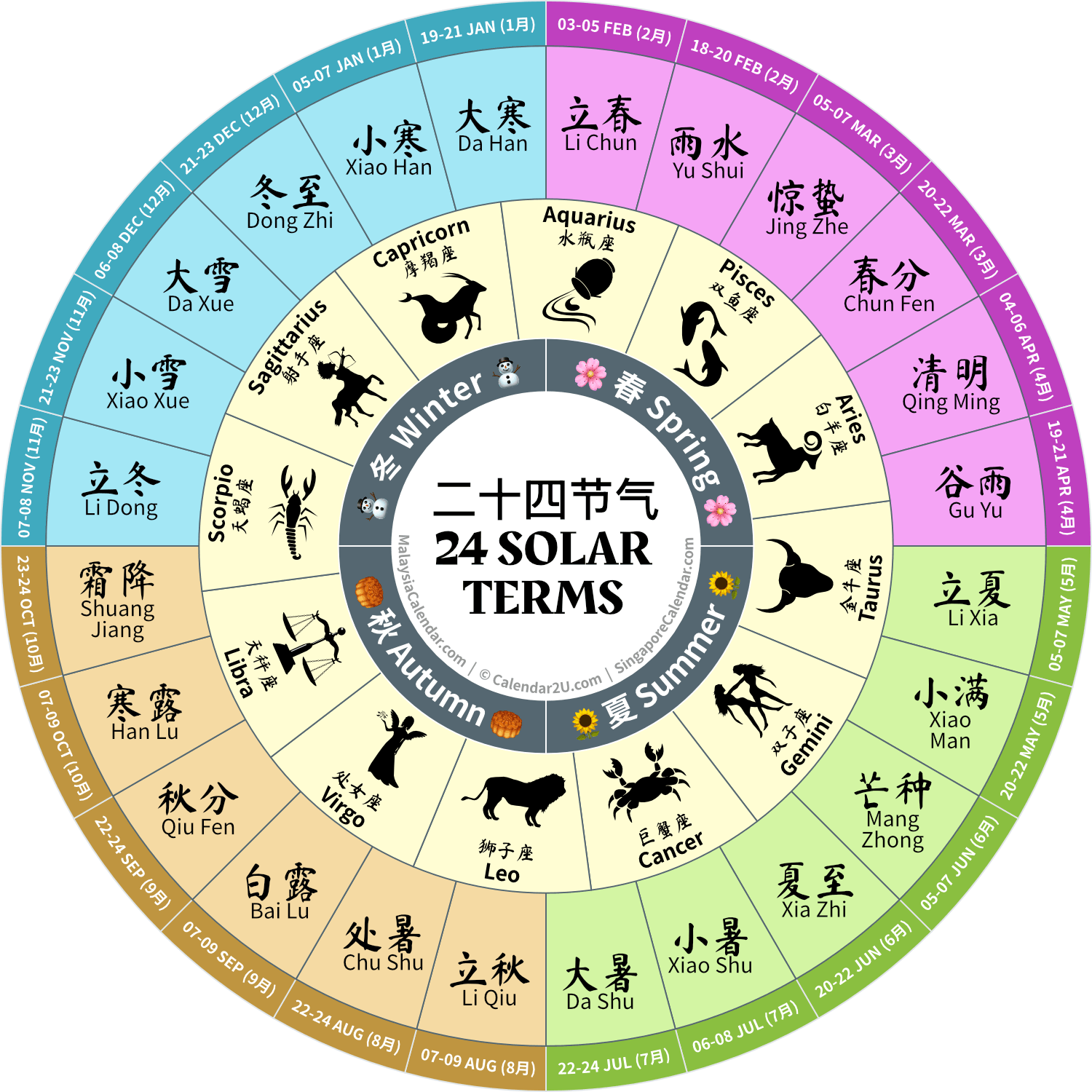
节气是中国古代根据自然现象和农业活动规律制定的时间体系,每个节气都反映了特定的天气变化、植物生长阶段或季节特征。二十四节气分为四季:
Each solar term is closely aligned with natural phenomena and agricultural rhythms, with names that describe weather patterns, growth stages of plants, or other seasonal characteristics. The 24 terms are divided into four seasons:
春季节气 (Spring Terms)
春季节气关注万物复苏、天气转暖和雨水增多,为农业活动和植物生长奠定基础。
Spring terms focus on the renewal of life, warming weather, and increased rainfall, setting the stage for growth and agricultural activities.
- 立春 (Li Chun - Beginning of Spring)
- 雨水 (Yu Shui - Spring Showers)
- 惊蛰 (Jing Zhe - Awakening of Insects)
- 春分 (Chun Fen - Spring Equinox)
- 清明 (Qing Ming - Clear and Bright)
- 谷雨 (Gu Yu - Grain Rain)
夏季节气 (Summer Terms)
夏季节气强调炎热天气、农作物生长旺盛以及随后的收获期,充沛的雨水支持植物发育。
The summer terms highlight the intense warmth, agricultural growth, and, later, harvest periods, with plenty of rainfall supporting plant development.
- 立夏 (Li Xia - Beginning of Summer)
- 小满 (Xiao Man - Grain Buds)
- 芒种 (Mang Zhong - Grain in Ear)
- 夏至 (Xia Zhi - Summer Solstice)
- 小暑 (Xiao Shu - Minor Heat)
- 大暑 (Da Shu - Major Heat)
秋季节气 (Autumn Terms)
秋季节气标志着天气转凉、收获时节以及白昼渐短,预示着冬季的临近。
The autumn terms mark the transition to cooler weather, harvest season, and shorter days, signaling the approach of winter.
- 立秋 (Li Qiu - Beginning of Autumn)
- 处暑 (Chu Shu - End of Heat)
- 白露 (Bai Lu - White Dew)
- 秋分 (Qiu Fen - Autumn Equinox)
- 寒露 (Han Lu - Cold Dew)
- 霜降 (Shuang Jiang - Descent of Frost)
冬季节气 (Winter Terms)
冬季节气强调寒冷天气、自然界休眠期以及保持温暖健康的过冬习俗。
The winter terms emphasize cold weather, the natural dormancy of nature, and customs for staying warm and healthy during the winter.
- 立冬 (Li Dong - Beginning of Winter)
- 小雪 (Xiao Xue - Minor Snow)
- 大雪 (Da Xue - Major Snow)
- 冬至 (Dong Zhi - Winter Solstice)
- 小寒 (Xiao Han - Moderate Cold)
- 大寒 (Da Han - Greater Cold)
